Civilians Under Militia Rule: West Kordofan Governor Warns of Coercion, Aid Diversion, and Displacement
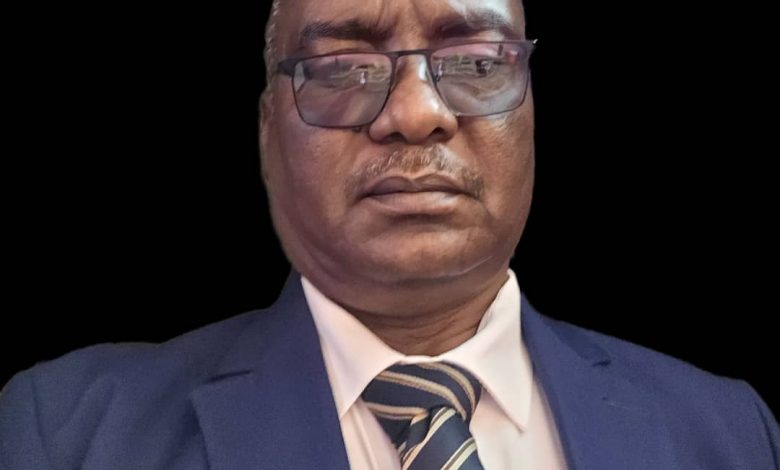
*Interview by: Imad Al-Nazif*
*Translated from Arabic by: Sabah Al-Makki*
In an interview with Alawda Newspaper, Governor Mohammed Adam Jayed alleges that civilians in areas controlled by the Rapid Support Forces (RSF) militia face ransom-based detention, obstruction of education, economic coercion, and worsening humanitarian conditions as the rainy season approaches.
West Kordofan has emerged as one of the most consequential theaters in Sudan’s current war. Its importance extends beyond military geography. The state sits at the intersection of strategic territory, tribal balance, agricultural production, livestock routes, humanitarian vulnerability, and the wider contest over Sudanese state authority.
Against this backdrop, Governor Jayed’s remarks should be read as a state-level account of how the presence of the RSF militia affects civilian life, local governance, humanitarian access, and social stability in one of Sudan’s most sensitive regions.
These claims are presented as the governor’s account. Their significance lies in the broader pattern they describe: militia rule not only as armed control over territory, but also as coercive power over civilians, food, aid, markets, movement, education, and local social relations.
*Key Claims from the Interview*
*In the interview, Governor Jayed makes the following claims and assessments:*
• *Ransom-based detention:* Civilians in militia-held areas are allegedly being detained and released only after payment, in practices the governor likens to “slave markets.”
• *Mercenary dependence:* The militia’s reliance on recruited fighters and mercenaries is identified as a source of internal fragility, weakening its cohesion and limiting its ability to withstand sustained military pressure.
• *Al-Fula and Ghebeish:* The return of Al-Fula and Ghebeish to state authority is presented as drawing closer, following recent military developments in Kordofan.
• *Erosion of local support:* Local communities and former support bases are reportedly distancing themselves from militia-aligned political actors.
• *Operational attrition:* Recent Sudanese Armed Forces (SAF) operations are framed as a strategy of “clipping the wings,” aimed at reducing militia mobility, operational reach, and command capacity.
• *Dar Hamar:* The area is portrayed as facing a deliberate campaign of economic punishment, including truck burnings, crop seizures, forced levies, displacement, and obstruction of education.
*The Interview*
*I. The Military Situation: Operational Pressure and the Restoration of State Authority*
*Imad Al-Nazif:*
How do you assess the latest military developments and the current situation on the ground?
*Governor Jayed:*
The latest developments in North and South Kordofan should be understood as part of a broader military process. These were not isolated events, but swift, targeted operations designed to limit the militia’s mobility, disrupt its networks, and test its ability to withstand sustained pressure.
The operations, which we describe as a strategy of “clipping the wings,” achieved their intended objectives. The militia was taken by surprise by the speed and precision of the action. A number of its fighters were captured, others were killed, and many fled. What happened exposed a structural weakness within the militia, particularly as it has become increasingly reliant on recruited fighters and mercenaries.
A fighter driven into battle by incitement, payment, or external mobilization does not possess the same resolve as someone defending their land, community, and state. That is what we mean when we say that those pushed into war by others do not truly fight.
*II. Humanitarian Conditions: Urgent Needs Ahead of the Rainy Season*
*Imad Al-Nazif:*
How would you describe the humanitarian and health conditions in localities currently under militia control?
*Governor Jayed:*
The humanitarian situation is extremely difficult and calls for urgent intervention. The scale of need is significant, and affected communities require far greater support, particularly as the rainy season approaches.
Shelter, food, medicine, and clothing are immediate priorities. Many families are living in conditions that would not withstand even light rainfall. We therefore appeal to the Humanitarian Aid Commission and to all humanitarian organizations to support our people at this critical stage.
We hope that state authority will be restored before the rainy season begins, bringing this suffering to an end. If that does not happen in time, the need for emergency assistance will become even more acute.
*III. Alleged Abuses Against Civilians: Detention, Ransom, and Human Trafficking Concerns*
*Imad Al-Nazif:*
Human rights organizations have reported grave violations and atrocities against civilians. Does the state government have documented evidence of what is taking place?
*Governor Jayed:*
Many of the atrocities committed by the RSF militia have been documented by the militia’s own members. They appear to record acts of violence as displays of strength, when in fact such recordings constitute evidence of criminal conduct. The world has already seen footage showing abuses, including the burning of civilian trucks loaded with agricultural crops.
Civilians living under militia control have also witnessed violations directly, including killings, looting, detention, extortion, and humiliation.
We have monitored public transactions involving detained civilians. People are seized, held, and released only after ransom is paid. These practices resemble slave markets, not merely as a metaphor, but because human beings are treated as bargaining assets whose freedom is assigned a price.
In substance, this amounts to a form of human trafficking, prohibited by law, religion, and basic moral principles.
*IV. Looting, Resource Smuggling, and the Obstruction of Education*
*Imad Al-Nazif:*
You have referred to the involvement of certain parties in looting and smuggling state resources. How reliable is this information?
*Governor Jayed:*
We possess evidence indicating that actors operating in those areas are involved in smuggling stolen property and state resources. Assistance intended for civilians does not reach them. Instead, it is seized by the militia by force, in circumstances that suggest clear collusion.
The harm extends beyond looting. Secondary-school students have been prevented from traveling to examination centers in safer states and were misled with false promises. As a result, they were deprived of their right to sit for their examinations and continue their education.
This is not merely an administrative or educational disruption. It is an assault on the future of a generation.
*V. Ransom Practices and the Collapse of Local Restraint*
*Imad Al-Nazif:*
You mentioned ransom demands and practices resembling human trafficking. Are these taking place through organized networks, known locations, or mainly through local militia actors?
*Governor Jayed:*
These practices appear to be primarily local militia conduct, often presented as individual acts or described locally as “shafshafa.” In reality, however, they are widely known, and there is no effective mechanism of control.
Armed actors operate without restraint or accountability. The ransom demanded varies according to the perceived social and financial status of the hostage. We have not received reports indicating that foreigners are directly involved in carrying out this particular practice.
*VI. Humanitarian Access, Aid Diversion, and Accountability*
*Imad Al-Nazif:*
You have said that some organizations operate in militia-controlled areas and that the militia seizes their supplies. Why has the state government not publicly named these organizations or requested formal action against them?
*Governor Jayed:*
The state, represented by the Advisory Council for Organizations and Humanitarian Affairs and the Humanitarian Aid Commission, is aware of these organizations and allows them to operate because the priority is to deliver humanitarian assistance to civilians wherever they are, including those trapped in areas under militia control.
This is a humanitarian and necessary objective. The problem is that the militia seizes supplies from organizations that are either unable to resist or, in some cases, appear to be operating under conditions that compromise the neutrality and integrity of aid delivery.
The answer is not to abandon civilians in those areas, but to strengthen monitoring, accountability, and delivery mechanisms to ensure that assistance reaches the people for whom it is intended.
*VII. Dar Hamar: Systematic Displacement and Economic Strangulation*
*Imad Al-Nazif:*
How would you assess the situation in Dar Hamar, particularly with regard to displacement and the targeting of civilian livelihoods?
*Governor Jayed:*
Dar Hamar has paid a heavy price for its longstanding national position, embodied by the late Prince Abdel Qader Munim Mansour, whose stance remains a distinguished chapter in the history of Hamar.
The area has been deliberately impoverished. Its people, land, crops, livestock, roads, and markets have all been targeted. Dar Hamar has been subjected to systematic looting, killing, intimidation, and displacement, carried out in a deliberate effort to weaken and punish the community.
Civilians have endured immense suffering. Some have been displaced beyond Dar Hamar and have sought refuge in safer areas across different states. Others remain displaced within Dar Hamar itself, moving between villages in search of temporary safety. They continue to face militia domination, repeated attacks, ambushes, extortion, arbitrary arrest, and unlawful detention.
A farmer may harvest his crop and then attempt to transport it discreetly by motorcycle or traditional cart, traveling for six or seven days toward markets in North Kordofan. Yet on reaching the state’s entry points, he may encounter militia members who burn his goods, seize them entirely, loot most of them, or impose illegal levies that exceed anything he could hope to earn from that long and exhausting journey. In some cases, he may even be killed.
This is not ordinary insecurity. It is economic strangulation designed to break civilian resilience.
*VIII. Displacement Figures: More Than 38,000 Families*
*Imad Al-Nazif:*
What is the current estimate of displaced families from West Kordofan?
*Governor Jayed:*
The number of displaced families continues to rise and now exceeds 38,000. They are currently spread across White Nile, Khartoum, Al-Jazira, and North Kordofan, with the largest concentration in El-Obeid.
We extend our appreciation to the Governor of North Kordofan, Professor Abdel-Khalig Abdel-Latif, for receiving and supporting them. However, needs remain urgent. Food, medicine, clothing, and shelter are critically required, particularly as the rainy season approaches.
*IX. Salary Committees and Public Financial Oversight*
*Imad Al-Nazif:*
What is the mandate of the salary committees, and how do they contribute to financial oversight?
*Governor Jayed:*
These committees are part of a routine administrative process conducted periodically to monitor salary disbursement, identify obstacles or irregularities, and address them as necessary. They also function as an oversight mechanism to strengthen financial control under wartime conditions.
*X. Agricultural and Livestock Revenues*
*Imad Al-Nazif:*
How are revenues from agricultural crops and livestock arriving in El-Obeid from West Kordofan currently being handled?
*Governor Jayed:*
Collection procedures and public revenues are governed by applicable regulations and laws. Since many of these goods currently reach markets in North Kordofan, the related revenues accrue there under existing administrative arrangements.
At the same time, cooperation between West Kordofan and North Kordofan remains strong. We remain grateful for the support and coordination provided by the authorities in North Kordofan.
*XI. Preventing Tribal Escalation and Preserving Social Cohesion*
*Imad Al-Nazif:*
West Kordofan has a highly sensitive tribal composition. What measures are being taken to prevent the war from escalating into a wider tribal confrontation?
*Governor Jayed:*
This is one of our highest priorities. The state government is using all available mechanisms to repair the social fabric, reject hate speech, and prevent tribal, regional, and local polarization.
Our objective is to preserve social cohesion in West Kordofan and support a society capable of reconciliation, coexistence, and openness to others. Academic institutions are contributing to this effort. We are coordinating with the University of West Kordofan and the University of Al-Salam to activate peacebuilding centers and give them a practical role in reconciliation.
The Peace and Reconciliation Council will also be reconstituted once state authority has been restored, allowing it to resume its proper functions. Native administration must likewise be reorganized and strengthened to contribute effectively to social stability.
Above all, a joint force drawn from the regular forces will be established to restore state authority and respond decisively to any acts of lawlessness.
*XII. Defections and the Militia’s Internal Fragility*
*Imad Al-Nazif:*
What is your assessment of former RSF militia leader Al-Nour Al-Gubba’s decision to join the SAF?
*Governor Jayed:*
Al-Gubba’s decision signals a significant moment in the militia’s internal fragmentation. In our assessment, such fractures and defections are likely to continue because the militia was not built on a national vision or legitimate political objectives, but on hollow slogans, tribal mobilization, and material interest.
Its real project has been looting and plunder. Once the sources of looting began to dry up, and after the militia had destroyed public and private property alike, the interests that held it together began to weaken.
The militia’s external sponsor and financier has also become preoccupied with the consequences of recent developments and has suspended support, at least for the time being.
If Al-Gubba’s move is followed by others, and if these defections translate into meaningful field support for the SAF and allied forces, they will accelerate the outcome the Sudanese people have long awaited.
*XIII. The Return of Al-Fula and Ghebeish to State Authority*
*Imad Al-Nazif:*
What is your assessment of the timeline for restoring full state authority over Al-Fula, Ghebeish, and the remaining parts of West Kordofan?
*Governor Jayed:*
We are seeing clear signs of accelerating fragmentation within the RSF militia. Internal divisions have widened, discontent is spreading, and the absence of coherent leadership has become increasingly visible. Local support bases have also begun to recognize the failure of the opportunistic political figures who promoted the militia and misled communities.
The SAF has prepared the ground and secured the necessary capabilities. In our assessment, the restoration of full state authority over Al-Fula and Ghebeish is drawing closer.
We are fighting from a position grounded in justice and legitimate grievance. Soon, Kordofan and Darfur will move beyond militia domination, and the path will open for reconstruction, recovery, and development.
*Editorial Note*
Governor Jayed’s interview should be read not only as a local account from one Sudanese state, but as a warning about the wider civilian consequences of militia rule.
The allegations raised here are directly relevant to foreign ministries, humanitarian agencies, legal monitors, and international policymakers. They concern ransom-based detention, aid diversion, forced displacement, economic coercion, obstruction of education, and the risk of communal fragmentation in a highly sensitive tribal environment.
For international actors, West Kordofan should therefore be understood as a test case for civilian protection, humanitarian accountability, social reconciliation, and the restoration of legitimate state institutions. The governor’s central message is that military stabilization and humanitarian protection cannot be treated as separate tracks. Without urgent assistance, stronger monitoring of aid delivery, protection for displaced families, and credible local reconciliation mechanisms, the civilian cost of the war will continue to deepen.